
Few pieces of classical music inspire as much curiosity as Ludwig van Beethoven’s Für Elise (often spelled “Für Élise” in older references). A common observation is that people quickly recognize the melody, yet they encounter many different sheet-music “versions” that look quite different on the page. Why does the same theme appear in so many difficulty levels—Easy, intermediate, or advanced—when the name stays the same? The answer isn’t just about arranger preference. It reflects how music notation, performance practice, and instrument-friendly transcription all shape what you’re actually learning.
Understanding the “Easy” Look: Melodies First on Arranger-Friendly Charts

When you see a simplified layout—often with fewer notes on the staff, clearer phrasing, and sometimes reduced ornamental details—it’s usually designed to help you hear and play the melody accurately early on. This type of version commonly emphasizes the recognizable opening and the main lyrical phrases, then scales back the harmonic accompaniment so your hands (or fingers) can coordinate without becoming overwhelmed. Deeper than convenience, there’s also a learning reason: Für Elise works like a “gateway” piece. The fascination comes from how the melody sings over a changing harmonic base, and early-arrangement editions let you concentrate on tone and timing before you’re required to manage every inner voice.
Easy Piano Arrangements: Why the First Theme Can Look “Rewritten”
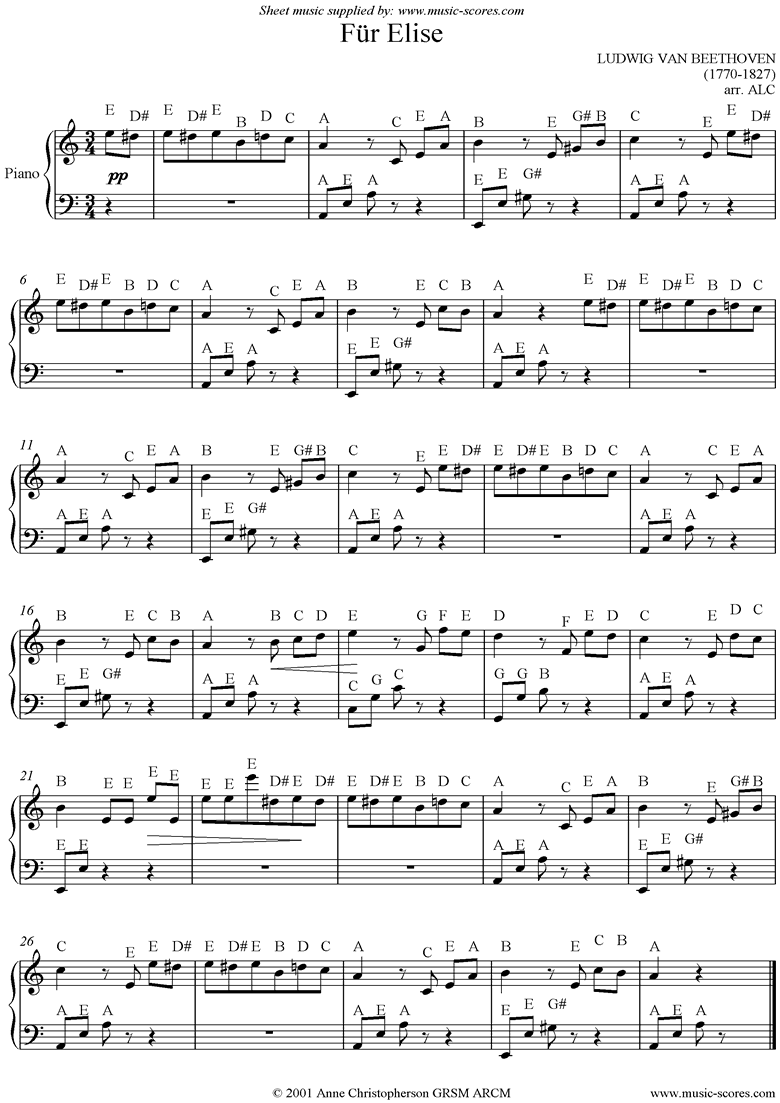
Easy piano scores frequently focus on the first theme and present it in a way that reduces leaps, streamlines patterns, or keeps the accompaniment more repetitive. At a glance, this can feel like the music has been “changed,” but the underlying musical identity remains intact. Arrangers often revoice chords, simplify rhythmic subdivisions, or omit some embellishments so the piece becomes playable by students who are still building technical steadiness. The deeper fascination here is that Für Elise reveals its structure even when simplified: the melody’s contour stays memorable, while the accompaniment gradually teaches how Beethoven’s harmony creates emotional tension and release. In other words, the “easy” score isn’t an imitation—it’s a staged introduction to Beethoven’s language.
Intermediate Versions: Ornamentation, Fingerings, and Musical Detail
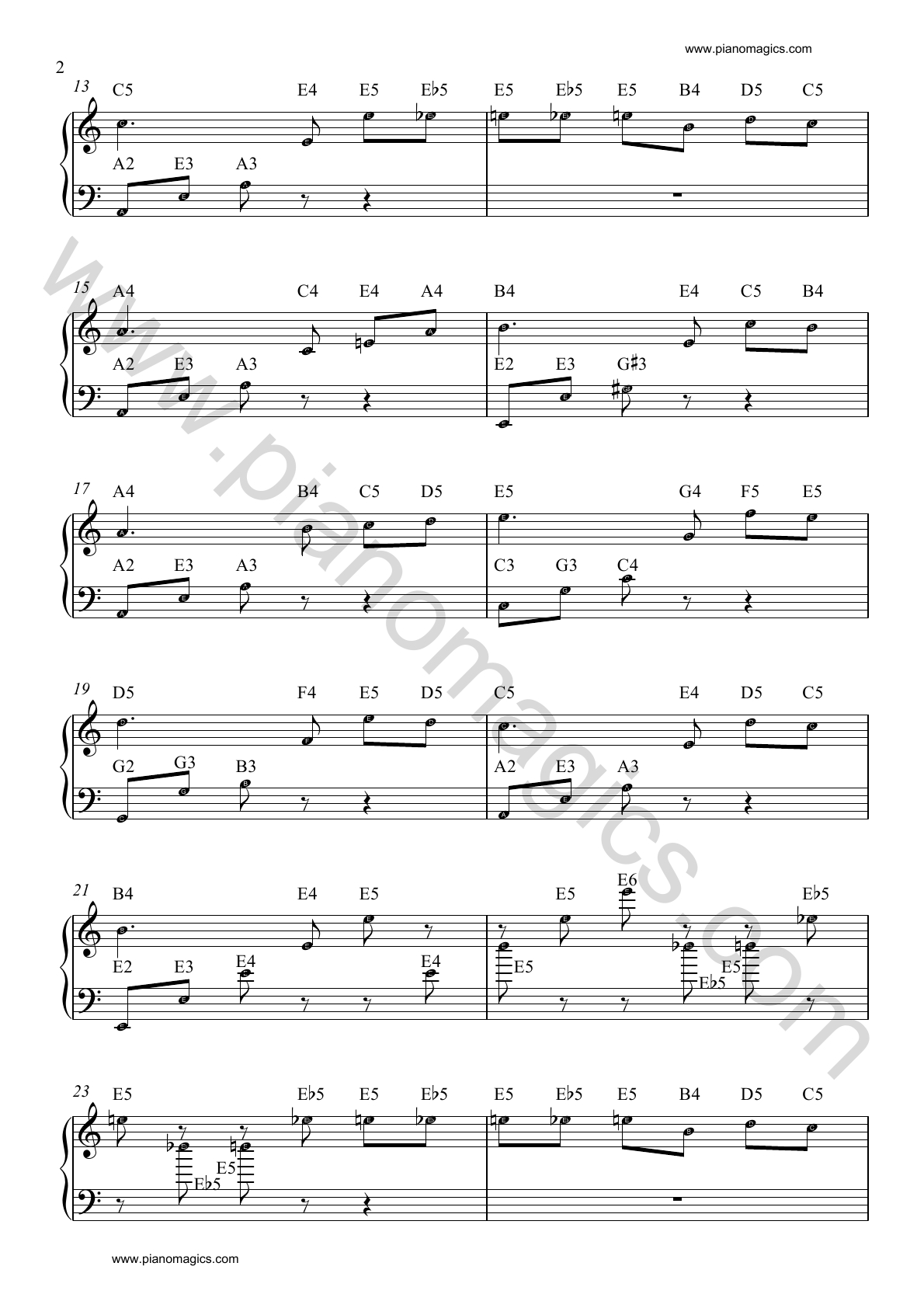
As editions move from easy to intermediate, you’ll usually notice more decorative figures, denser accompaniment patterns, and a greater emphasis on musical articulation. Many intermediate versions also include fingerings or pedal suggestions, which can be the difference between a performance that merely sounds correct and one that actually feels “alive.” Beethoven didn’t write Für Elise as a puzzle-box—it’s expressive and lyrical, but the balance between melody and inner motion matters. That balance is precisely what intermediate sheet music tries to support: you begin learning not only what notes to press, but how to shape them into a coherent narrative—how to let the melody glow while the harmony keeps breathing underneath.
Why Advanced Scores Feel Different: Full Texture, Subtle Timing, and Control

Advanced arrangements and more “complete” scholarly editions tend to preserve the full texture: inner voices, ornamental patterns, and the subtle rhythmic realities that simplified editions may soften. The common observation—“why does it get harder if it’s the same piece?”—often has a deeper answer: difficulty isn’t only about note volume. It’s about control. Advanced scores demand consistent tone production across hand crossings, careful timing of grace notes, and a clear understanding of how harmony functions moment-to-moment. This is where fascination becomes almost psychological: you start hearing the piece as Beethoven’s architecture rather than as a catchy melody. The emotional effect intensifies because you can finally play the tension exactly as it’s implied by the motion of the accompaniment.
Original-Sheet Sensibilities: Authenticity, Interpretation, and the “Same Theme” Feeling

Original-style or “closer to the source” editions can look unfamiliar to beginners, partly because they assume a different baseline of technique and historical notation conventions. Yet these versions also explain why Für Elise remains endlessly captivating: the melody isn’t a standalone ringtone—it’s embedded in a careful web of motion. When you move from simplified copies to editions that feel more traditional, you often discover that details you previously treated as decoration actually change the character of the phrase. So even if you still “recognize it,” your ear begins to separate the essential from the ornamental. That shift—from recognition to understanding—is one of the deepest reasons people return to this music again and again.
Ultimately, the variety of Für Elise sheet music versions isn’t a contradiction. It’s a ladder. Easy arrangements help you enter the door; intermediate versions teach musical balance; advanced scores refine control; and original-style editions restore nuance. The melody stays famous, but the experience changes—and that’s where Beethoven’s fascination continues to grow.
If you are looking for Beethoven. Für Elise 1st theme Easy Piano classical sheet music you’ve came to the right place. We have 10 Pictures about Beethoven. Für Elise 1st theme Easy Piano classical sheet music like Für Elise (Easy) – Ludwig Van Beethoven Free Piano Sheet Music PDF, Für Elise – toplayalong.com and also Für Elise – toplayalong.com. Here you go:
Beethoven. Für Elise 1st Theme Easy Piano Classical Sheet Music
www.music-scores.com
Beethoven. Für Elise 1st theme Easy Piano classical sheet music
Evening Masterworks: Ludwig Van Beethoven's Symphony No. 1 In C, Op. 21
www.wusf.org
Evening Masterworks: Ludwig van Beethoven's Symphony No. 1 in C, Op. 21 …
Bản Nhạc Fur Elise: Tờ Nhạc Và Hướng Dẫn – Activegaliano.org
activegaliano.org
Bản Nhạc Fur Elise: Tờ Nhạc Và Hướng Dẫn – Activegaliano.org
Für Elise Variation Piano – Beethoven – (Tutorial Piano, Sheets Score

sheetmusic-world.com
Für Elise variation Piano – Beethoven – (Tutorial Piano, Sheets Score …
Beethoven Für Elise Easy Piano – DTWNIR
strickaz.com
Beethoven Für Elise Easy Piano – DTWNIR
Beethoven Fur Elise Original Sheet Music
ravens.nckl.gov.kh
Beethoven Fur Elise Original Sheet Music
Für Elise – Toplayalong.com
toplayalong.com
Für Elise – toplayalong.com
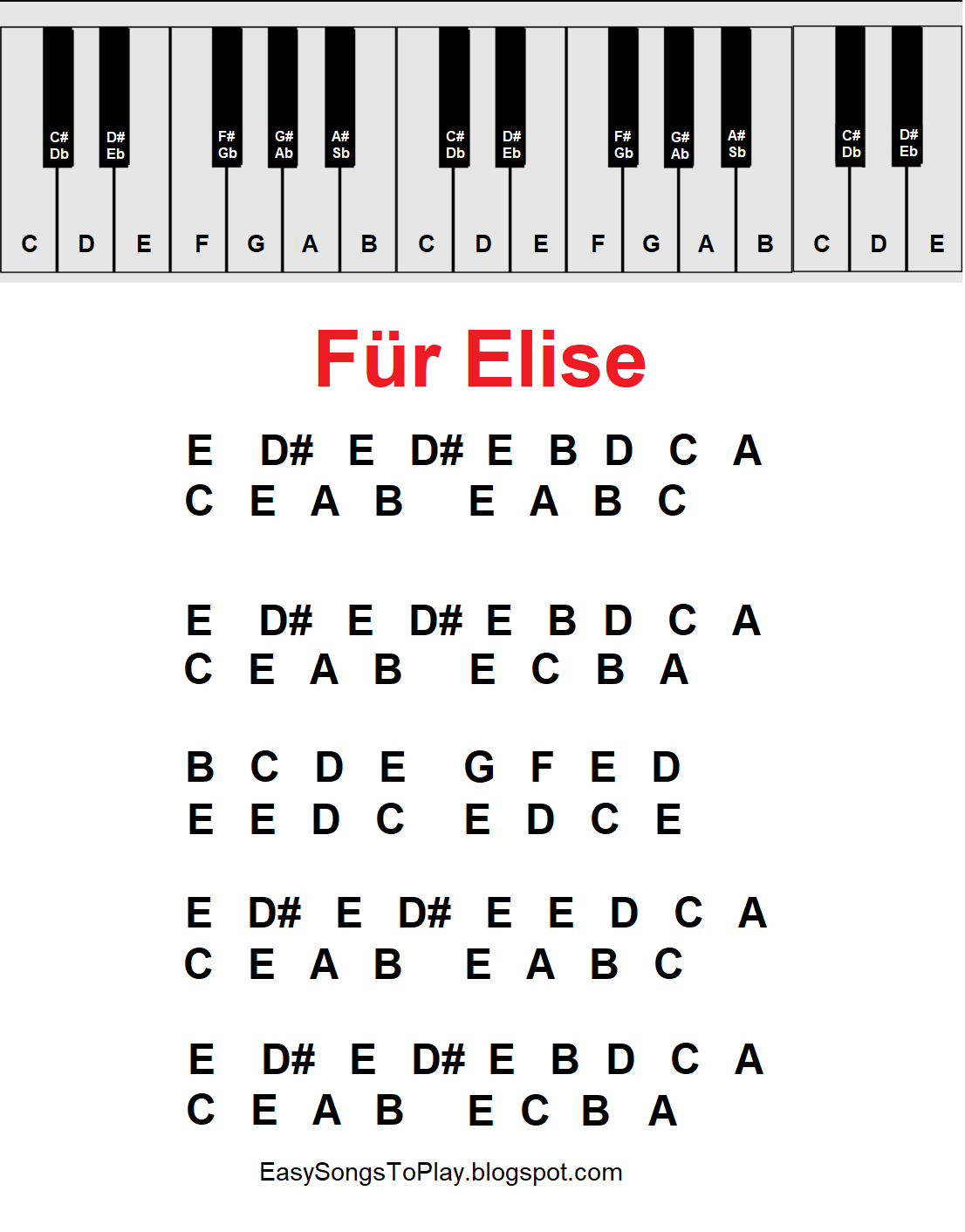
Fur Elise PIANO: A Beginner's Guide To Playing Beethoven's Classic With
easysongstoplay.blogspot.com
Fur Elise PIANO: A Beginner's Guide to Playing Beethoven's Classic with …
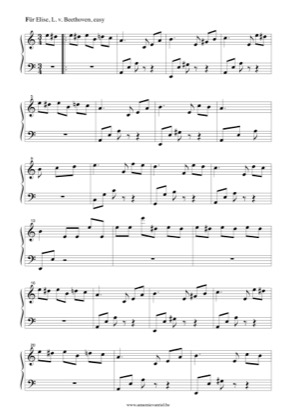
Für Elise (Easy) – Ludwig Van Beethoven Free Piano Sheet Music PDF
sheetdownload.com
Für Elise (Easy) – Ludwig Van Beethoven Free Piano Sheet Music PDF
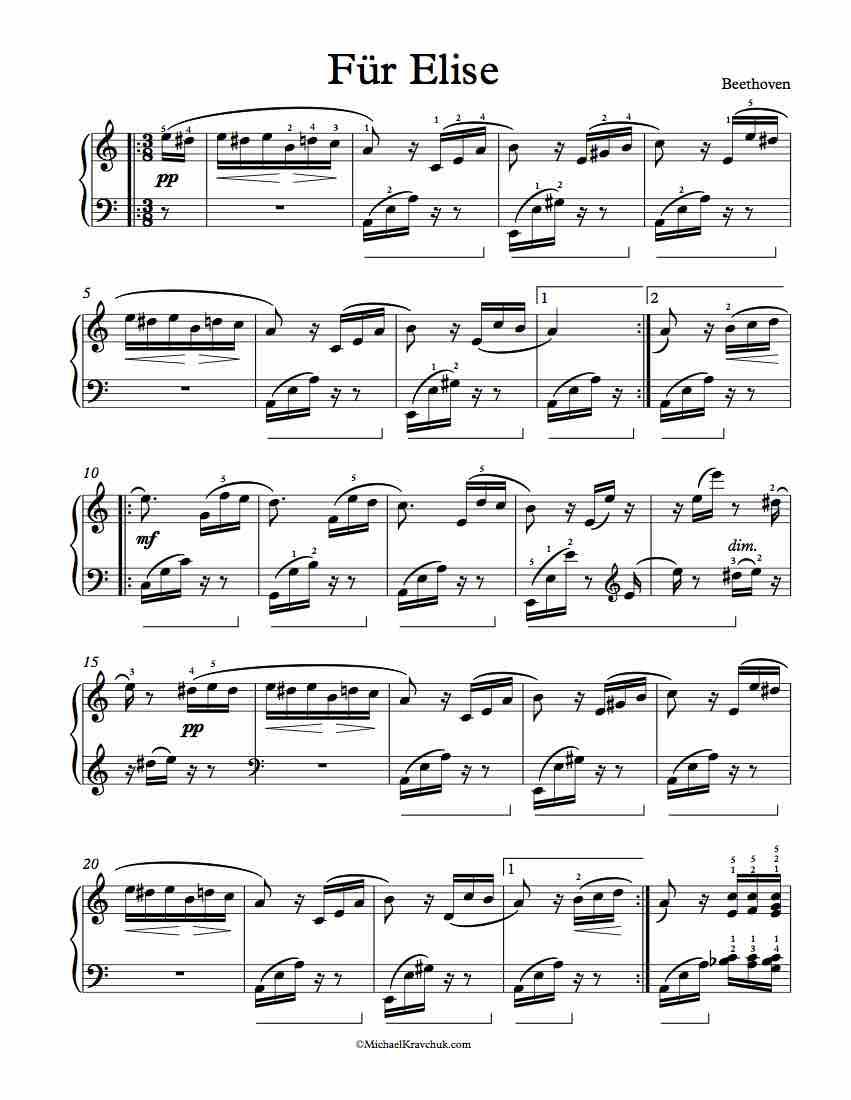
Free Piano Sheet Music – Für Elise
michaelkravchuk.com
Free Piano Sheet Music – Für Elise

