
Few pieces of music manage to feel both instantly recognizable and endlessly adaptable—and Ride of the Valkyries by Richard Wagner is a prime example. A common observation is that it sounds “the same” wherever you hear it, whether in full orchestral form or in a simplified arrangement. Yet that sense of familiarity is exactly what makes the piece so fascinating: the melody is memorable, the rhythm is forceful, and the harmonic framework is sturdy enough to survive transcription for almost any instrument or skill level. Beneath the surface, several deeper musical reasons explain why this theme keeps returning in classrooms, concert halls, and online sheet music libraries.
A Conductor’s Score: Why the Rhythm Feels Like Momentum
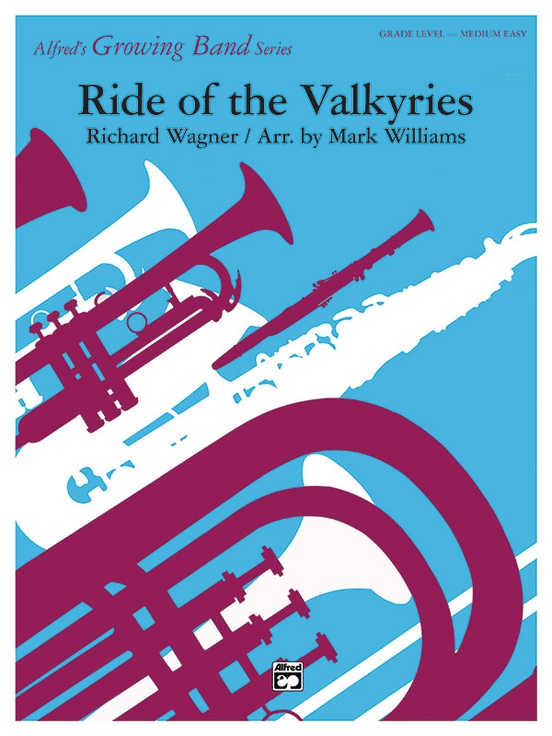
When you encounter Ride of the Valkyries in a conductor score, the first thing you notice is how cleanly the driving pulse can be organized across sections. The famous galloping rhythm doesn’t merely “sound fast”—it creates momentum through clear accent patterns and strong groupings. That’s why band leaders often describe it as a piece that teaches discipline: every ensemble must lock into the same rhythmic grid, especially in passages where parts overlap. Even if different instruments carry the theme, the underlying structure stays consistent, which helps explain why the melody feels familiar regardless of arrangement. The deeper fascination lies in how Wagner builds forward motion: the orchestration and repeating contours work like a machine, turning attention toward timing, balance, and dynamic control.
Very Easy Piano Arrangements: The Theme That Translates Instantly
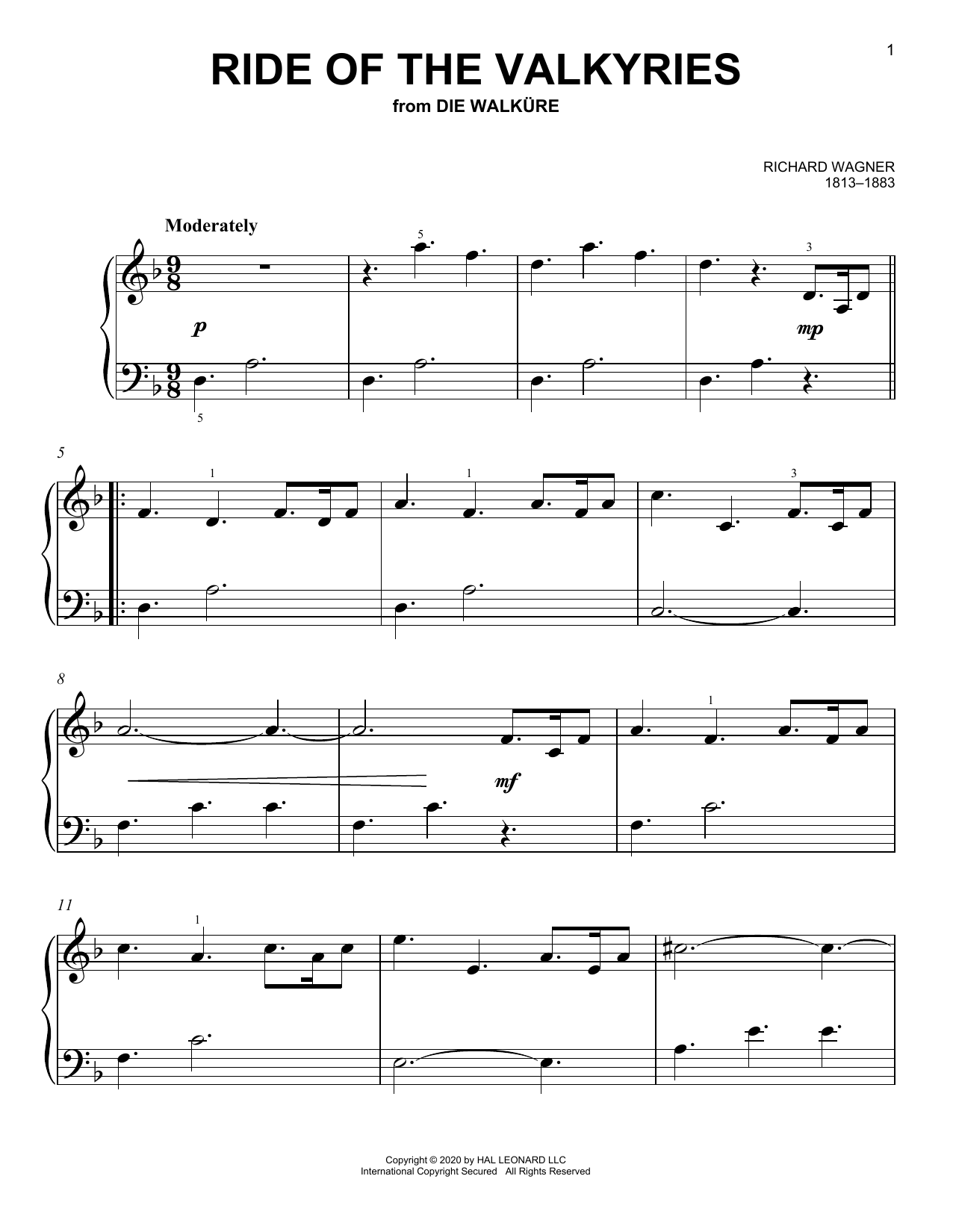
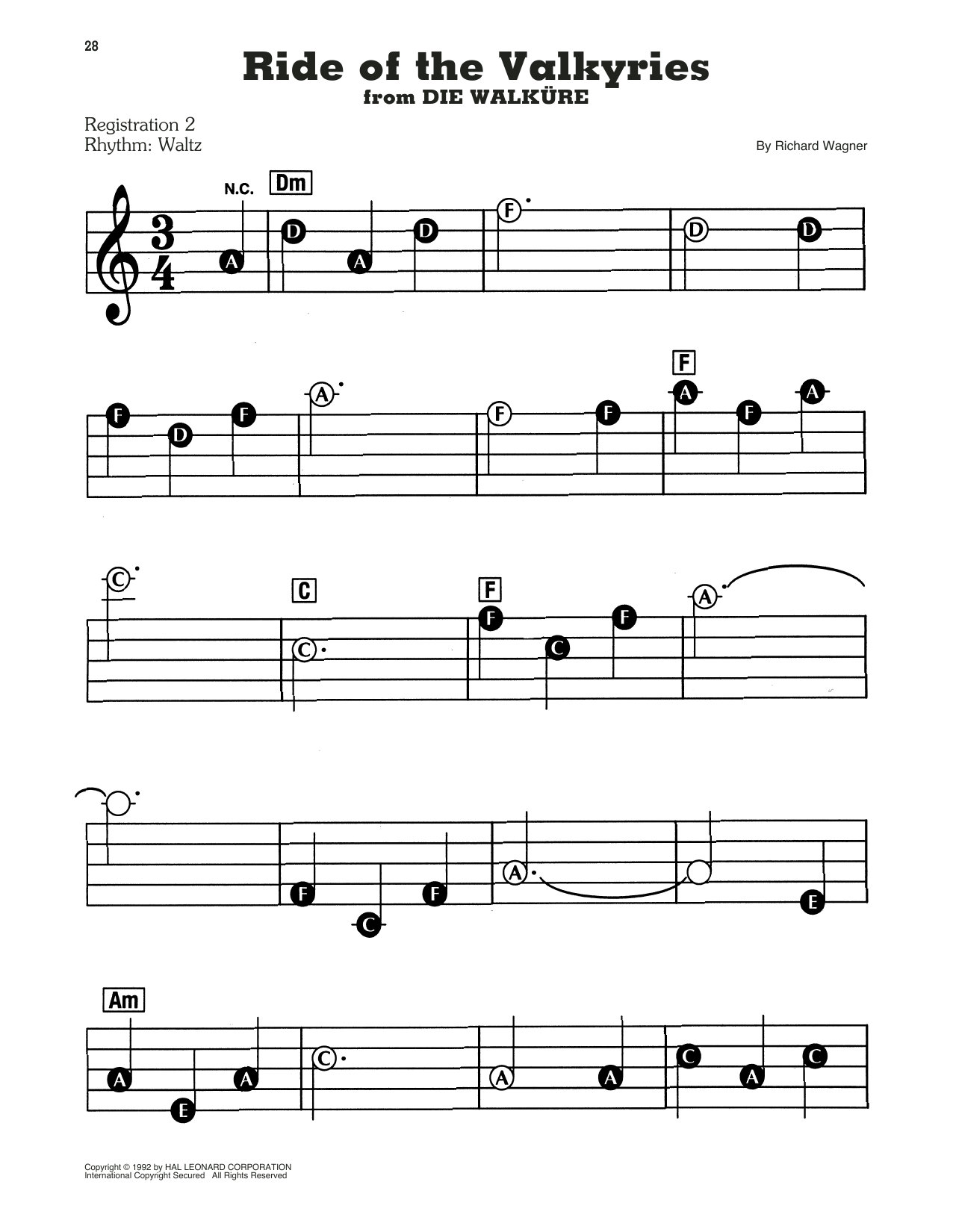
Beginner-friendly piano editions often surprise players: the piece can feel simplified without losing its identity. That happens because the core idea is not dependent on subtle orchestral color; it survives as a strong melodic-rhythmic pattern. In many “very easy” arrangements, the harmonic complexity is pared down, but the essential shape remains—so learners still experience the characteristic forward drive. This is one of the deepest reasons the composition endures: its musical “signature” is carried by rhythm and contour more than by delicate voicing. As a result, even when technical demands are reduced, listeners can still recognize the ride-like energy. For students, that recognition creates motivation; for audiences, it creates instant connection.
Tuba Solo Editions: Making a Giant Theme Sing from One Voice
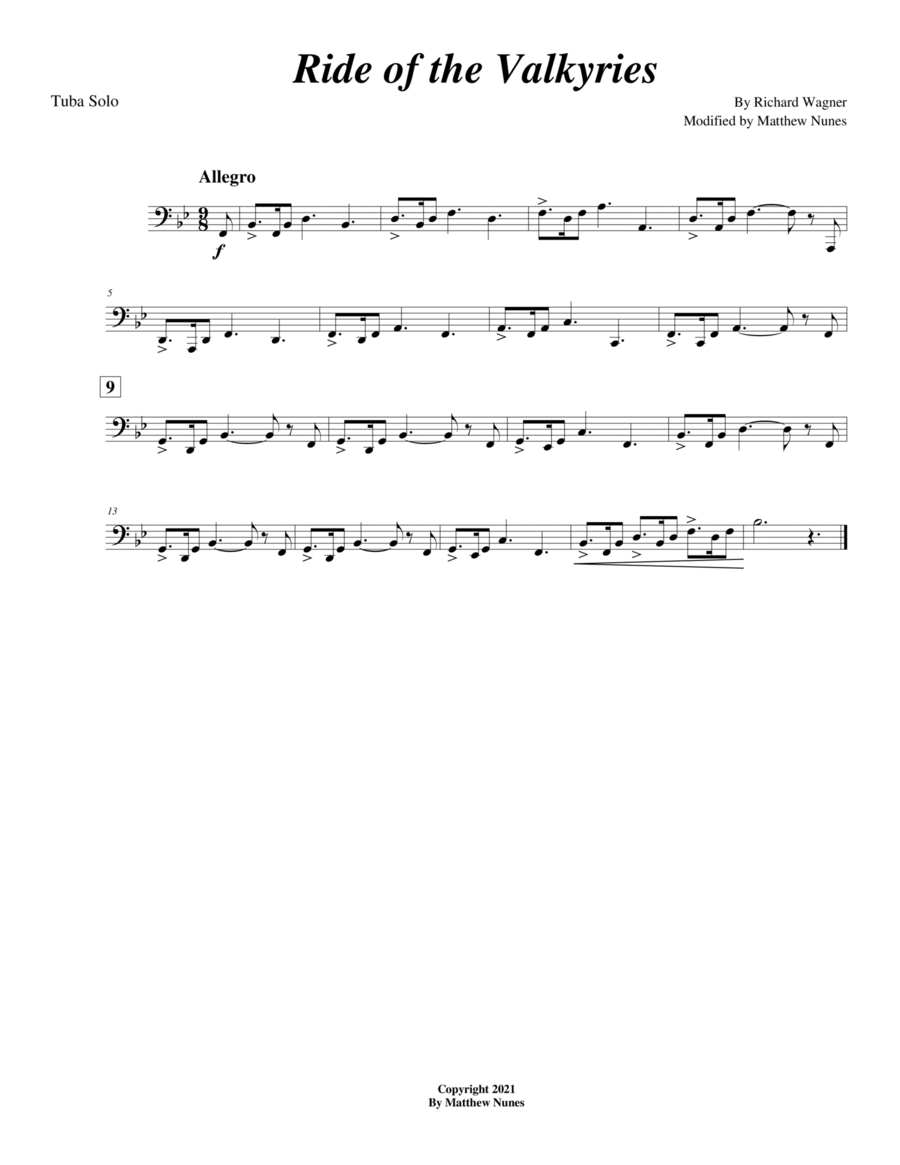
Seeing Ride of the Valkyries as a tuba solo highlights another common observation: the theme seems to “work” even when a piece is reduced to a single instrument. On paper, that might sound impossible—how can one line carry the weight of a massive orchestral effect? Yet Wagner’s writing often emphasizes clear melodic pacing and predictable rhythmic emphasis, which translates well to low brass. The tuba edition becomes fascinating because it flips the listening experience: instead of hearing multiple colors colliding, you hear a single, grounded force. The lower register turns the gallop into something more monumental—almost architectural. Deeper fascination comes from the contrast between expectation and reality: the same rhythmic identity can sound heroic, ceremonial, or even comically intense, depending on timbre. That adaptability helps explain why arrangements proliferate.
Marching Band Arrangements: The Theme Built for Motion

Marching band versions often feel almost inevitable, as if the music was designed for steps and formations. In many marching contexts, the rhythmic profile of Ride of the Valkyries aligns perfectly with percussive motion: the theme snaps into beats that are easy to count while moving. That’s why the piece is frequently used for performances that require clear impact rather than lyrical subtlety. The deeper reason is that Wagner’s writing tends to emphasize structural clarity—phrases are shaped so the listener can follow the “engine,” even amid noise and distance. The arrangement then becomes a tool for choreography: crescendos, staccato gestures, and accents can be mapped to a visual performance plan. What seems like “the same melody again” is actually a flexible framework that supports different interpretations of energy.
Trombone Solo Versions: A Bold Answer to the Question “Can One Instrument Carry It?”

Trombone solo arrangements underline just how durable the piece’s musical identity is. Brass instruments naturally favor heroic articulation, and Ride of the Valkyries rewards that style with confident, declarative phrasing. A trombone can mimic orchestral intensity through slide positioning and expressive dynamics—turning what might be a repeating theme into an evolving performance. This addresses a deeper fascination: the piece invites interpretation even when the notes are familiar. Players make choices about timing, breath pacing, vibrato intensity, and how aggressively they lean into accents. That variability is part of why the theme keeps circulating in performance spaces: it gives musicians a recognizable platform from which to show personality. So while it’s easy to observe that the “same” song appears everywhere, the real story is that Wagner’s core design—rhythm-forward, contour-driven, structurally clear—makes it a canvas for countless voices.
If you are searching about Download Ride Of The Valkyries – Richard Wagner | Very Easy Piano Sheet you’ve visit to the right place. We have 10 Images about Download Ride Of The Valkyries – Richard Wagner | Very Easy Piano Sheet like Ride of the valkyries – Richard Wagner Sheet music for Trombone (Solo, Richard Wagner "The Ride Of The Valkyries" Sheet Music Notes | Download and also Download Ride Of The Valkyries – Richard Wagner | Very Easy Piano Sheet. Here it is:
Download Ride Of The Valkyries – Richard Wagner | Very Easy Piano Sheet
freshsheetmusic.com
Download Ride Of The Valkyries – Richard Wagner | Very Easy Piano Sheet …
The Valkyrie: Ride Of The Valkyries — Richard Wagner | Last.fm
www.last.fm
The Valkyrie: Ride of the Valkyries — Richard Wagner | Last.fm
Ride Of The Valkyries: Concert Band Conductor Score: Richard Wagner
www.alfred.com
Ride of the Valkyries: Concert Band Conductor Score: Richard Wagner …
Richard Wagner "The Ride Of The Valkyries" Sheet Music Notes | Download
musicnotesbox.com
Richard Wagner "The Ride Of The Valkyries" Sheet Music Notes | Download …
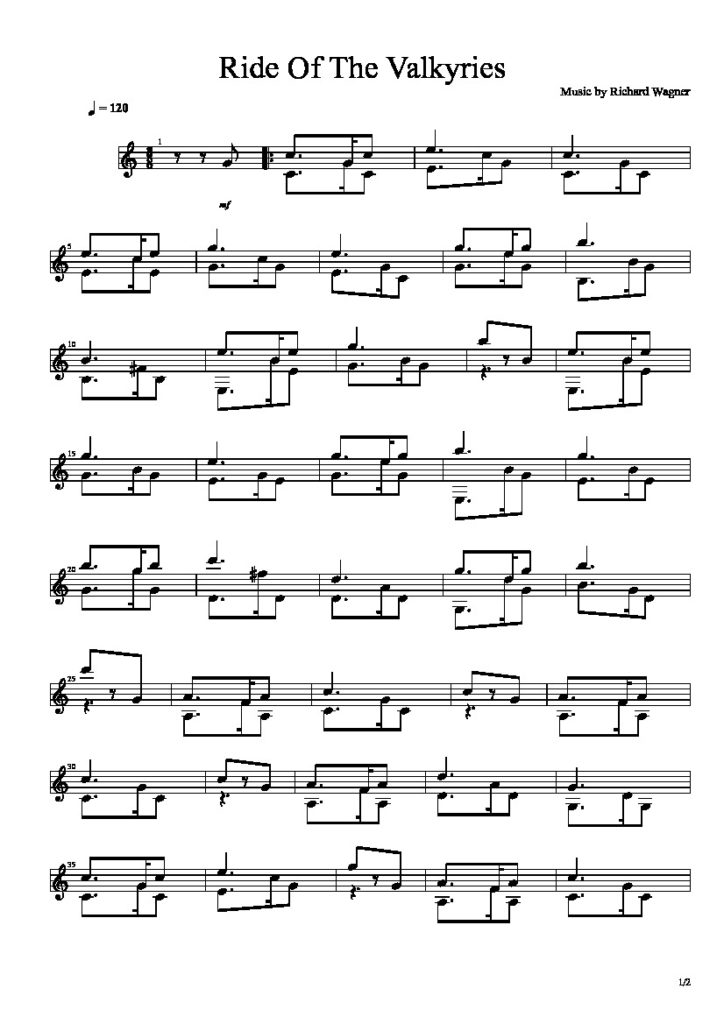
Wagner. Richard – Ride Of The Valkyries By Richard Wagner – Classical
www.cglib.org
Wagner. Richard – Ride of the Valkyries by Richard Wagner – Classical …
Ride Of The Valkyries – Richard Wagner Sheet Music For Trombone (Solo
musescore.com
Ride of the valkyries – Richard Wagner Sheet music for Trombone (Solo …
Ride Of The Valkyries (Tuba Solo) By Richard Wagner – Tuba – Late
www.sheetmusicplus.com
Ride of the Valkyries (Tuba solo) by Richard Wagner – Tuba – Late …
Ride Of The Valkyries, Marching Band Arrangement, Wagner Sheet Music
musescore.com
Ride of the Valkyries, Marching Band Arrangement, Wagner Sheet music …
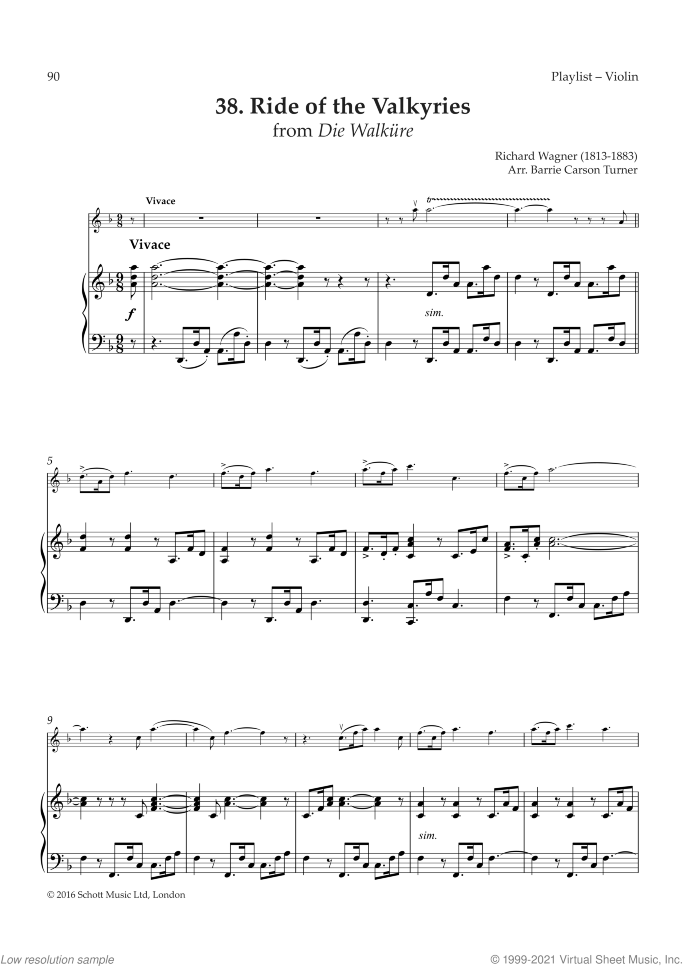
Ride Of Valkyries, From Die Walküre Sheet Music For Violin And Piano
www.virtualsheetmusic.com
Ride of Valkyries, from Die Walküre sheet music for violin and piano
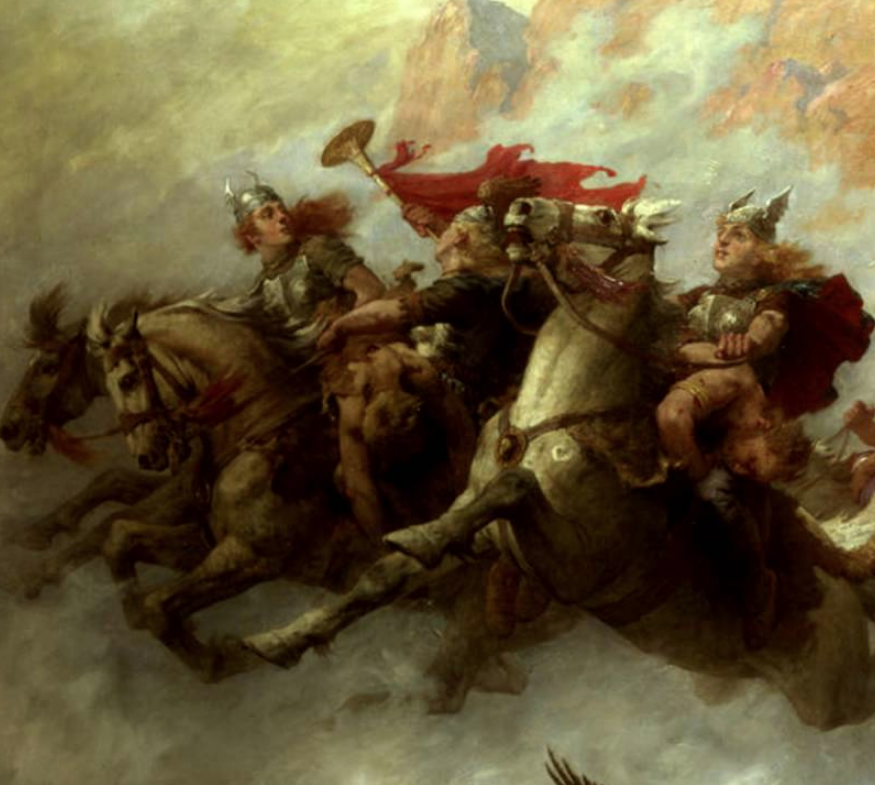
Richard Wagner – The Valkyrie: Ride Of The Valkyries Sheet Music For
note-store.com
Richard Wagner – The Valkyrie: Ride of the Valkyries sheet music for …

